Changi Airport Trials Fully Automated Passenger Loading Bridge for Faster Aircraft Docking
Changi Airport Group has initiated trials for a groundbreaking fully automated passenger loading bridge, aiming to streamline the docking process of aircraft and improve operational efficiency. The new system, known as the “intelligent docking system,” is designed to ensure consistent and accurate aircraft docking, preventing potential damage due to contact with the plane.
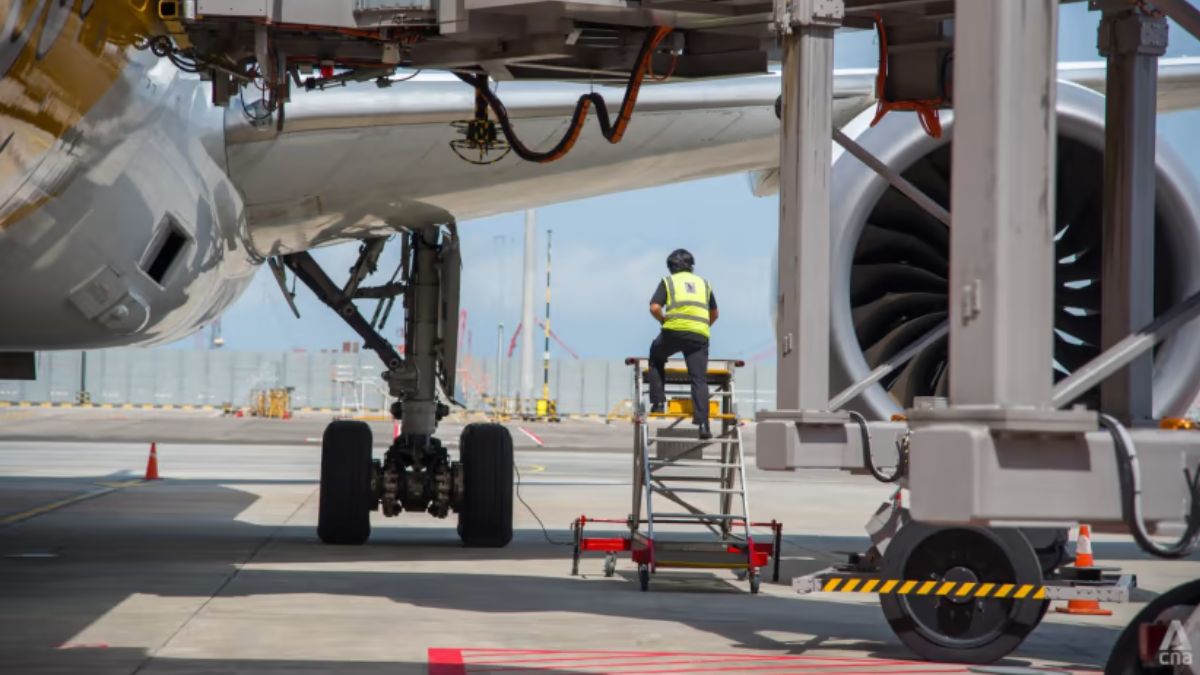
Currently, the aircraft docking process relies on operators to manually activate the passenger loading bridge and maneuver it for the final 50cm to accurately dock with the aircraft door. This process requires two operators for wide-body planes with two aircraft doors. While operators typically complete the process within two minutes, efficiency can vary depending on the operator’s proficiency.
The new fully automated passenger loading bridge eliminates the need for manual checks and adjustments. The intelligent docking system employs advanced technologies such as an aircraft door detection system, laser distance sensors, and other hazard-detecting sensors to replace the current manual procedures. A remote control panel on the ground allows a single operator to manage both arms of the bridge for wide-body planes, streamlining the docking process further.
Changi Airport Group emphasized that the new system not only enhances efficiency but also minimizes human error, contributing to increased safety levels. The adoption of automation in the docking process is expected to free up ground handling agents from manual tasks, enabling them to focus on more critical responsibilities. The trial for the fully automated bridge is set to commence with a Scoot flight from Hong Kong, followed by KLM and Bangkok Airways in subsequent phases. While the time-saving benefits might not be overtly noticeable to passengers, the innovation represents a significant step towards improving operational processes at Changi Airport.